
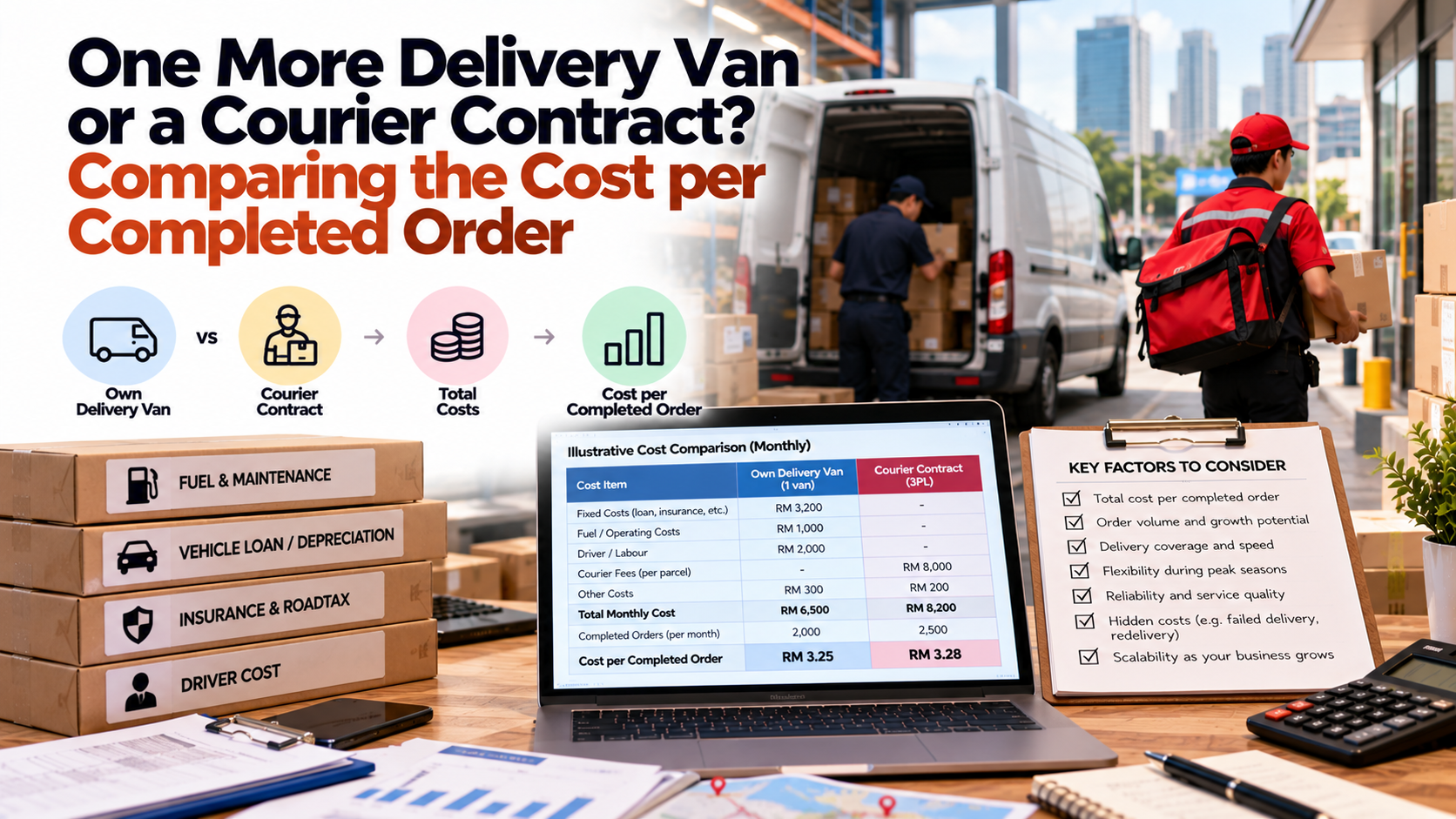
The florist’s delivery board is getting crowded. Corporate arrangements need to arrive before offices open, birthday bouquets have afternoon delivery windows, and last-minute orders keep appearing after routes have been planned. The existing driver is working longer hours, while occasional courier bookings are becoming a regular expense.
Buying another van may seem like the natural next step. It gives the business more control over handling and scheduling, and the monthly vehicle payment may look manageable beside the courier bills. However, a vehicle payment and a courier invoice cover different things. Comparing them directly can make either option appear cheaper than it really is.
Gekonnt’s accounting services include financial analysis and advisory support, helping businesses connect their financial records with operating decisions. For a growing florist, that means understanding the cost of getting each order to its destination successfully, alongside the cash commitment and capacity each delivery option provides.
Define What Counts as a Completed Order
Before comparing costs, decide what the delivery operation is expected to achieve. A bouquet left at the wrong reception desk, delivered after an event or returned because nobody was available may appear as a delivery attempt in a system. It has not necessarily fulfilled the customer’s order.
For this comparison, a completed order should mean the agreed items reached the correct recipient or authorised location in acceptable condition, within the agreed delivery arrangement. Record first-attempt success separately. An order completed after two attempts should count once in the denominator, while both attempts remain in the cost.
Use a consistent reporting period and treatment for unresolved orders. Costs associated with failed or abandoned deliveries should remain visible rather than disappearing from the comparison. Otherwise, an operation with more unsuccessful deliveries may appear efficient simply because its difficult orders have been excluded.
Compare the Additional Work Each Option Would Handle
The decision concerns another van, so the relevant starting point is the workload beyond the existing delivery operation’s practical capacity. Total company orders are not automatically available to keep the new vehicle busy. Some will continue travelling on the existing van, while others may require specialist handling or fall outside normal routes.
Map the additional orders by location, day and requested time window. Include loading, travel, parking, recipient contact and the return journey. A driver who can complete twenty nearby deliveries across a flexible day may manage far fewer when customers require narrow arrival windows at scattered locations.
Also distinguish genuine capacity shortages from planning problems. Late order preparation, incomplete addresses or frequent route changes can create overtime without proving that another vehicle is needed. Addressing those issues first gives management a more credible estimate of the additional capacity it needs to purchase.
Build a Complete Cost for the Van
The cost of another van extends beyond its purchase price or financing instalment. The comparison needs to consider the driver, applicable employment costs, insurance, servicing, repairs, fuel or charging, parking, road charges and any equipment required to secure the arrangements safely.
Include the practical arrangements for absences and breakdowns. If the florist will still need a courier when the driver is on leave or the vehicle is unavailable, that backup expenditure belongs in the plan. A forecast based on uninterrupted availability can understate the cost of providing a dependable delivery service.
For an operating-cost view, spread the vehicle’s expected consumption of value over its useful period using reasonable assumptions, including its estimated residual value. Keep the funding schedule separate: a purchase deposit and loan repayments affect cash differently from depreciation. Avoid counting both the full loan principal repayments and depreciation as operating expenses in the same calculation.
The decision should focus on future costs that differ between the options. Existing expenses that remain unchanged should not be loaded onto one option simply because an allocation is available. Equally, new fixed costs, such as an additional driver’s salary, matter even though they do not vary with every delivery.
Read the Courier Quote Beyond the Headline Rate
A courier’s advertised rate may apply only to particular parcel sizes, delivery areas or service windows. A florist needs a quote that reflects bouquets, standing arrangements and any other products it actually sends. Handling requirements should be discussed explicitly rather than assumed to be included.
Ask how the price changes for urgent bookings, waiting time, failed attempts, redelivery, cancellations and peak periods. Check whether there is a minimum monthly commitment and whether the quoted capacity is available when the florist needs it. A favourable rate provides limited value if collection cannot be secured on the busiest day.
The florist may also incur internal costs under a courier arrangement. Staff still prepare orders, book collections, provide delivery instructions and resolve exceptions. Include additional packaging or coordination work where it differs from the in-house option, while avoiding arbitrary charges for work that is identical under both arrangements.
Use an Illustrative Comparison to Find the Volume Question
Consider a hypothetical florist evaluating additional delivery capacity. Assume a simplified monthly van cost of S$6,000 before route-related running costs. This amount includes the driver and vehicle-related fixed costs for the comparison. Assume a further S$3 per completed order for route-related expenditure.
At 600 completed orders, the estimated monthly cost would be S$7,800, or S$13 per order. At 400 orders, it would be S$7,200, or S$18 per order. At 800 orders, it would be S$8,400, or S$10.50 per order.
Now assume a comparable courier arrangement costs S$15 per completed order, with expected surcharges and internal coordination costs already reflected. At 400 orders, that would cost S$6,000, below the illustrative van cost. At 800 orders, it would cost S$12,000, above it.
Under these simplified assumptions, the options meet at 500 completed orders a month: S$6,000 divided by the S$12 difference between S$15 and S$3. These figures are illustrative, not market quotations. The result is useful only if service quality is comparable, the workload fits the van’s capacity and the assumptions capture expected failed attempts and other costs without double-counting.
Test Whether Those Orders Fit the Route
A monthly volume threshold is only a starting point. Five hundred orders spread across workable routes are different from five hundred orders concentrated into a few short delivery windows. The second pattern may require more than one driver or substantial outside support despite having the same monthly total.
Review route density and timing together. Regular office deliveries in nearby buildings may create a stable base for an in-house vehicle. Scattered residential orders with specific arrival requirements may produce more travel and waiting for each successful handover.
Product size can constrain capacity before driving hours do. Large floral stands may occupy space that could otherwise hold several bouquets, and unsuitable stacking can increase damage. Management should test the proposed workload against actual loading requirements rather than treating every order as an interchangeable unit.
A short trial using realistic routes can reveal these limits. Record departure times, loading delays, completed stops and return times. The purpose is to establish an achievable operating range, not to build the investment case around the best day the driver has ever managed.
Keep Seasonal Peaks Separate From Everyday Demand
Valentine’s Day or Mother’s Day may create a compelling impression that the business needs another van. However, a vehicle acquired for a small number of exceptional days creates commitments throughout quieter months. The annual decision needs a view of ordinary demand as well as peaks.
Prepare separate forecasts for normal weeks, busy periods and exceptional event days. Estimate how much of each workload the additional vehicle could realistically handle. Any excess still requiring couriers should remain in the forecast rather than being treated as solved by the purchase.
A mixed arrangement may be worth testing. The florist could retain an in-house vehicle for predictable routes and use couriers for overflow or distant deliveries. Alternatively, it could continue outsourcing while building enough recurring volume to support another vehicle. Each arrangement should be evaluated on its own costs and service requirements.
Put Failed Deliveries and Damage Into the Review
A failed delivery can trigger several costs beyond the next transport charge. Staff may spend time contacting the buyer, the arrangement may need refreshing, and the business may offer a replacement or refund. Record those consequences against the order so the delivery comparison reflects what actually happened.
Separate transport costs from product replacement and customer compensation costs. Keeping them identifiable makes the underlying problem easier to diagnose, while a broader fulfilment-cost measure can show their combined financial effect. Count each cost once, particularly where the courier issues a credit or reimburses part of a loss.
Responsibility should also be investigated. An incomplete address supplied at checkout, an order prepared late and a courier handling failure require different fixes. Assigning every exception to the delivery provider can hide internal problems that another van would not resolve.
Claims terms deserve attention before appointing a courier. Understand what evidence is required, which goods or losses are excluded and whether any compensation limit leaves a material exposure. Do not assume that the full selling value of a damaged arrangement will automatically be recovered.
Examine the Cash Commitment Before Buying
An operating comparison may favour the van while the purchase still places pressure on available cash. The florist may need a deposit, vehicle preparation and other upfront expenditure before the additional delivery volume becomes reliable. Those payments compete with stock purchases, payroll and other business needs.
Prepare a dated cash forecast using actual purchase and financing proposals. Show the upfront amount, recurring payments and expected timing of customer receipts. Keep this separate from the operating-cost calculation so that profitability and affordability are both visible.
Test a slower growth scenario as well. If the extra orders arrive several months later than expected, the vehicle and driver commitments may begin before the anticipated savings. Management should understand that exposure before signing, especially where the decision relies on prospective contracts rather than established demand.
Create a Small Set of Useful Delivery Records
The analysis does not require an elaborate reporting system, but it does require consistent records. Connect each order to its delivery method, promised window, attempts, completion status and related charges. Record exceptions promptly while the reasons are still clear.
For the in-house operation, review completed orders alongside route hours, mileage and additional staffing or backup costs. For couriers, reconcile invoices to bookings and investigate recurring surcharges. A monthly total labelled “delivery expenses” cannot explain whether costs rose because of volume, route changes or avoidable failures.
Gekonnt’s financial analysis and advisory support is relevant to turning these records into a usable comparison. A clear cost structure helps management distinguish assumptions from established results and review the decision as demand changes. Operational staff provide the route knowledge; financial records show its commercial effect.
Choose the Capacity the Business Can Sustain
Another van may be worthwhile when recurring orders create efficient routes and the florist can support the ongoing commitment. A courier contract may offer better value when volumes fluctuate, destinations vary or the business needs flexibility. A combination can also work, provided the responsibilities and costs are clear.
Before committing, compare the same workload under each option, test achievable capacity and examine both the operating cost and cash schedule. Agree on the service standard that must be maintained, then review cost per completed order alongside punctuality, damage and unresolved deliveries.
Speak with Gekonnt about its accounting, financial analysis and advisory services if the decision needs clearer financial support. With reliable delivery records and realistic assumptions, the florist can choose an arrangement that supports growth without mistaking a manageable vehicle payment or a low courier rate for the full cost of fulfilling an order.