
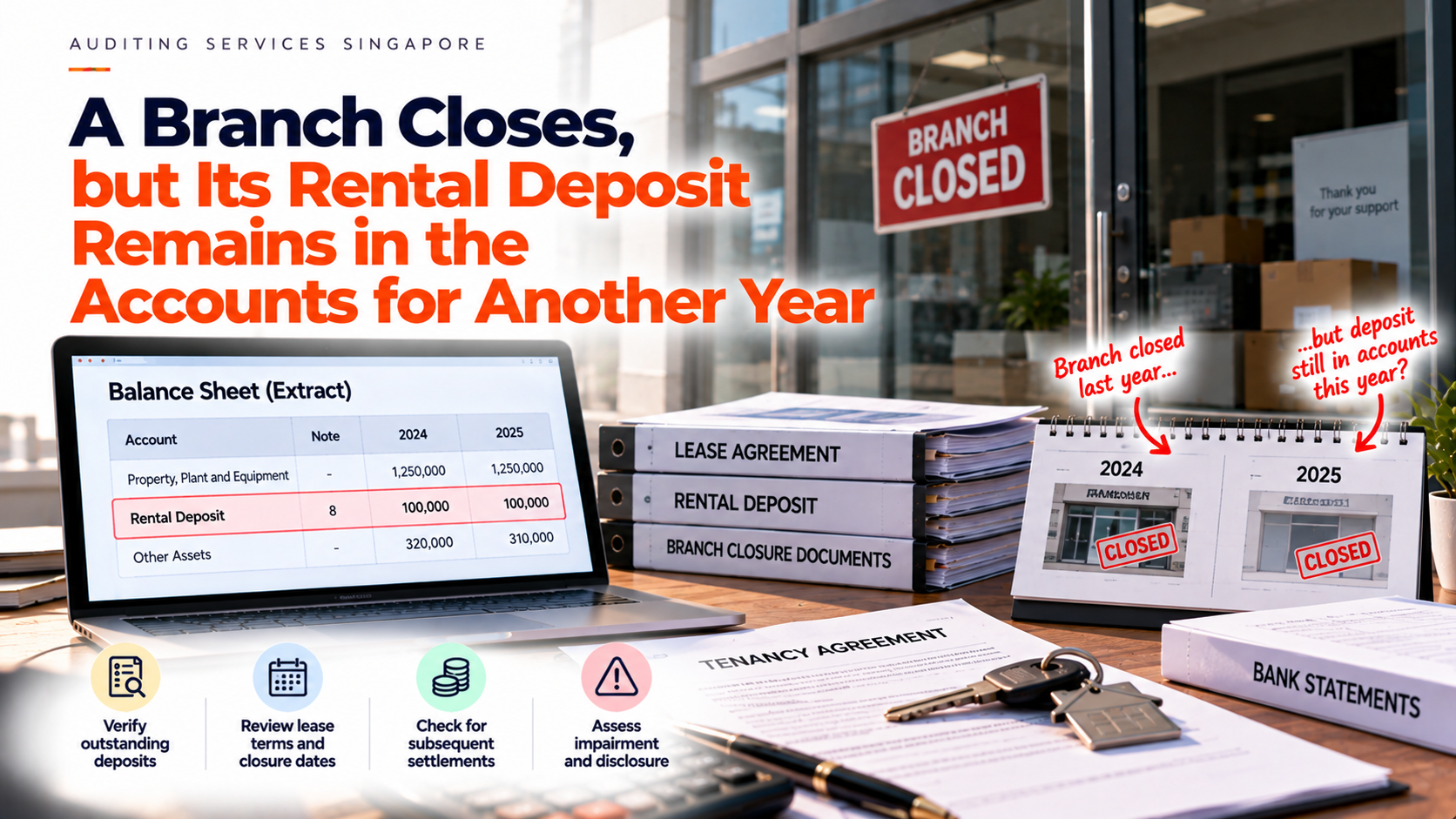
The branch has stopped trading. Employees have moved to other locations, equipment has been removed, and the keys have been returned. Management considers the closure complete until the next year-end review reveals that the rental deposit is still recorded at its original amount.
Finance has followed up occasionally, but the explanation remains vague. The landlord is checking reinstatement work, a final statement is outstanding, or the employee who handled the closure has left. The balance continues rolling forward without a clear assessment of when it will be returned or how much the company expects to receive.
Gekonnt PAC provides accounting, bookkeeping and financial reporting services. For businesses closing premises, reliable records help connect the operational handover with the remaining financial matters. A deposit should remain in the accounts on a supportable basis, with its status understood and responsibility for follow-up clearly assigned.
Closing the Branch Does Not Necessarily End the Lease
The date a branch stops trading may differ from the lease termination date or the date the landlord accepts possession. These distinctions matter when establishing the company’s remaining obligations and the conditions for returning the deposit.
Review the lease, any termination agreement and the handover correspondence. Identify the effective end date, relevant notice requirements and the terms governing the deposit.
A company may have vacated early while remaining responsible for certain contractual payments. Alternatively, the parties may have agreed to an early termination with specific settlement conditions. The accounting team needs the actual arrangement.
Avoid assuming that returning the keys establishes an unconditional right to an immediate refund. Equally, do not accept an indefinite delay without asking which contractual condition remains outstanding. Where the parties disagree about their rights, appropriate legal advice may be needed.
Confirm the Balance Before Pursuing the Refund
The amount in the deposit account may not be the amount currently held by the landlord. Over several lease renewals, the company may have paid additional deposits, received partial refunds or agreed to apply part of the balance against a charge.
Reconcile the ledger with the original payment records, renewal agreements and any settlement documents. Confirm the legal entity that paid the deposit and the party responsible for returning it.
Separate the rental security deposit from other amounts, such as utility deposits, renovation deposits or advance rental payments. They may have different refund conditions and counterparties.
A clear opening reconciliation prevents the company from pursuing the wrong figure. It also provides a basis for identifying whether an apparent recovery problem is actually an incomplete accounting record.
Build a Complete Handover File
Deposit recovery often depends on information held outside finance. The branch manager, facilities team or external contractor may have the documents showing the condition of the premises and the work completed.
Collect the handover acknowledgement, inspection reports, photographs, contractor invoices and relevant correspondence. Identify any items the landlord requested after the initial inspection and whether the company completed them.
The file should distinguish the company’s own confirmation from acceptance by the landlord. A contractor’s statement that work is complete may not resolve a disagreement about the required standard or scope.
Record outstanding matters in a short schedule. Each item should show the landlord’s concern, the company’s response, supporting evidence and next action. This is more useful than leaving finance to interpret a long email chain months after the branch has closed.
Ask for an Itemised Settlement Position
A statement that the deposit is being retained “pending finalisation” does not explain the amount expected back. Request a breakdown of proposed deductions and the basis for each item.
Possible issues might include unpaid charges, reinstatement work or damage claims, depending on the lease and facts. Each proposed deduction should be assessed against the agreement and supporting evidence.
A landlord’s proposed deduction is not automatically an accepted company obligation. Management may agree with some items and dispute others. The financial records should reflect a supported assessment rather than simply adopt whichever total appears in the latest email.
If the undisputed amount can be released separately, management can explore that option with the landlord. The outcome depends on the arrangement, but separating agreed and disputed items can make the discussion more focused.
Distinguish Settlement Deductions From Collection Risk
A reduced refund can arise for different reasons. The company may agree that the landlord can apply part of the deposit against a valid outstanding charge. Alternatively, the company may be entitled to a refund but face uncertainty about whether the landlord will pay.
These situations should not be treated as the same accounting issue. Agreed settlement of an obligation requires consideration of the related balance or expense. Uncertainty about collecting a financial asset requires assessment under the applicable impairment requirements.
A disputed deduction may require further analysis of the company’s rights before either conclusion is reached. Simply calling the entire shortfall a “bad debt” can obscure what actually happened.
Finance should document the reason for any adjustment and how it relates to the supporting records. This helps avoid both unsupported balances and duplicate charges in the accounts.
Use an Example to Separate the Amounts
Consider a hypothetical company with a S$45,000 rental deposit. Following closure, it agrees to S$6,000 of reinstatement charges and S$3,000 of final unpaid charges. Assume the agreement validly applies those amounts against the deposit.
The remaining refund is S$36,000. If the landlord returns S$20,000, the company still needs to follow up on S$16,000 and assess the support for that outstanding amount.
The accounting entries depend on what has already been recorded. If the S$9,000 of agreed charges is already included in payables or another relevant liability, applying the deposit should not create the same expense again.
If those charges have not been recorded, finance needs to assess their nature and appropriate reporting period. The example illustrates why the deposit reconciliation must connect with the wider closure accounts, rather than operate as an isolated spreadsheet.
Review Recoverability Before Another Year Passes
A refundable rental deposit commonly represents a contractual right to receive cash. Its classification and measurement should be assessed under the applicable financial reporting framework. Where the relevant financial instrument requirements apply, expected credit losses also require consideration.
Management should examine the evidence supporting collection, including correspondence, agreed settlement terms, receipts and information about the counterparty. An old balance is a reason to investigate, but age alone does not determine the amount to write down.
Conversely, the absence of a formal refusal does not establish that the deposit remains fully recoverable. Repeated missed payment promises or an inability to obtain a meaningful response may affect the assessment.
The review should explain the expected amount and timing of recovery. It should also distinguish accounting judgments from the company’s decision about how actively to pursue the claim.
Keep the Reporting Classification Current
A deposit may originally have been associated with a lease extending over several years. Once the branch closes, finance should reconsider whether its presentation remains appropriate under the applicable requirements.
The assessment should reflect the contractual position and expected recovery, rather than automatically retain the classification used when the lease began. Moving an amount between account headings does not resolve uncertainty about collection.
Management reports can provide additional practical detail, such as the amount under negotiation, the agreed refund and the date of the most recent substantive response. This helps directors understand the position even where the statutory presentation is more summarised.
Gekonnt’s accounting and financial reporting services can support the preparation of these records and assessments. Management still needs to provide current information about the closure and negotiations so that the reported position reflects the available evidence.
Check Whether the Refund Has Already Arrived
Before concluding that the landlord has failed to repay, check the company’s bank records and receipt allocations. Refunds may arrive under a property management company’s name or without a clear reference to the closed branch.
A payment could also have been posted to income, a suspense account or another deposit balance. In that case, the rental deposit remains outstanding in the ledger even though cash has been received.
Compare receipts with the landlord’s remittance information and investigate plausible matches. Confirm the amount and source before reallocating anything.
This check is particularly useful where several branches share a landlord or where the company has changed bank accounts. It can prevent unnecessary collection disputes and correct the reporting without assuming that every old deposit represents a loss.
Assign Responsibility After the Branch Team Leaves
A branch closure often removes the people who know the history. The manager transfers, the facilities contractor finishes its work, and the finance team inherits an unresolved balance with little context.
Assign a named owner for the remaining deposit matters before those handovers occur. The owner should know where the records are stored, who to contact and which decisions need management approval.
Set review dates and escalation points. An outstanding refund should not receive the same brief “followed up” note every month without any assessment of progress.
Where the issue remains disputed, management should decide on the appropriate commercial or legal next step. Finance can maintain the reconciliation and accounting assessment, but it should not be left indefinitely responsible for resolving a contractual disagreement without support.
Connect Deposit Recovery With the Closure Cash Forecast
The company may have included the expected deposit refund when budgeting for the closure. If recovery is delayed or reduced, the cash available for other commitments changes.
Update the forecast using supported assumptions. Distinguish money already received, amounts agreed for payment and amounts still disputed. Do not treat the full original deposit as available cash simply because it remains recorded as an asset.
The closure may also have generated costs that are still unpaid. Management should review the expected refund alongside those obligations without assuming they can all be offset.
This gives directors a clearer view of the remaining financial effect of the branch closure. It also helps explain why an operation that has stopped trading can continue affecting group cash planning.
Review Other Balances Left Behind
An unresolved rental deposit can signal that the financial closure process was incomplete. Other balances may also need attention, including utility deposits, supplier credits, prepaid services and equipment records.
The review should identify which items still belong to the business and what action is required to settle or update them. Some may be valid assets awaiting recovery, while others may have already been used, refunded or disposed of.
Avoid clearing everything through a general closure expense merely to remove the branch from the reporting structure. Each material balance needs an explanation and appropriate treatment.
A closure schedule provides a practical way to track the work. It should reconcile with the ledger and remain open until the significant items have been resolved or are clearly supported.
Make Financial Closure Part of the Exit Plan
For future closures, include deposit recovery in the original timetable. Identify the lease conditions, expected handover evidence and person responsible for final settlement before the premises are vacated.
Arrange for the relevant operational and finance teams to share the same records. Any agreed deductions, partial refunds or changes to the settlement should reach finance promptly.
The final review should confirm what remains outstanding and why. A branch can be operationally closed while its financial closure continues, but that position should be visible and actively managed.
These steps reduce the likelihood of a deposit remaining unchanged for another year simply because everyone assumed someone else was handling it.
Support the Balance With a Clear Recovery Position
A rental deposit should not become a permanent entry attached to a branch that no longer exists. Its continued recognition needs support, and the business needs a practical plan for resolving the outstanding amount.
The review begins with the lease and payment history, then connects handover evidence, proposed deductions and actual receipts. Finance can use that information to assess the remaining balance and avoid recording the same closure cost twice.
Gekonnt PAC provides accounting, bookkeeping and financial reporting services for businesses reviewing outstanding balances and supporting records. Companies with unresolved branch deposits can discuss the information needed to explain their financial position.
A useful next step is to prepare a one-page settlement summary for each closed location. State the original deposit, agreed deductions, refunds received, remaining claim and person responsible. That gives management a clear basis for deciding what to pursue and what the accounts should continue to show.