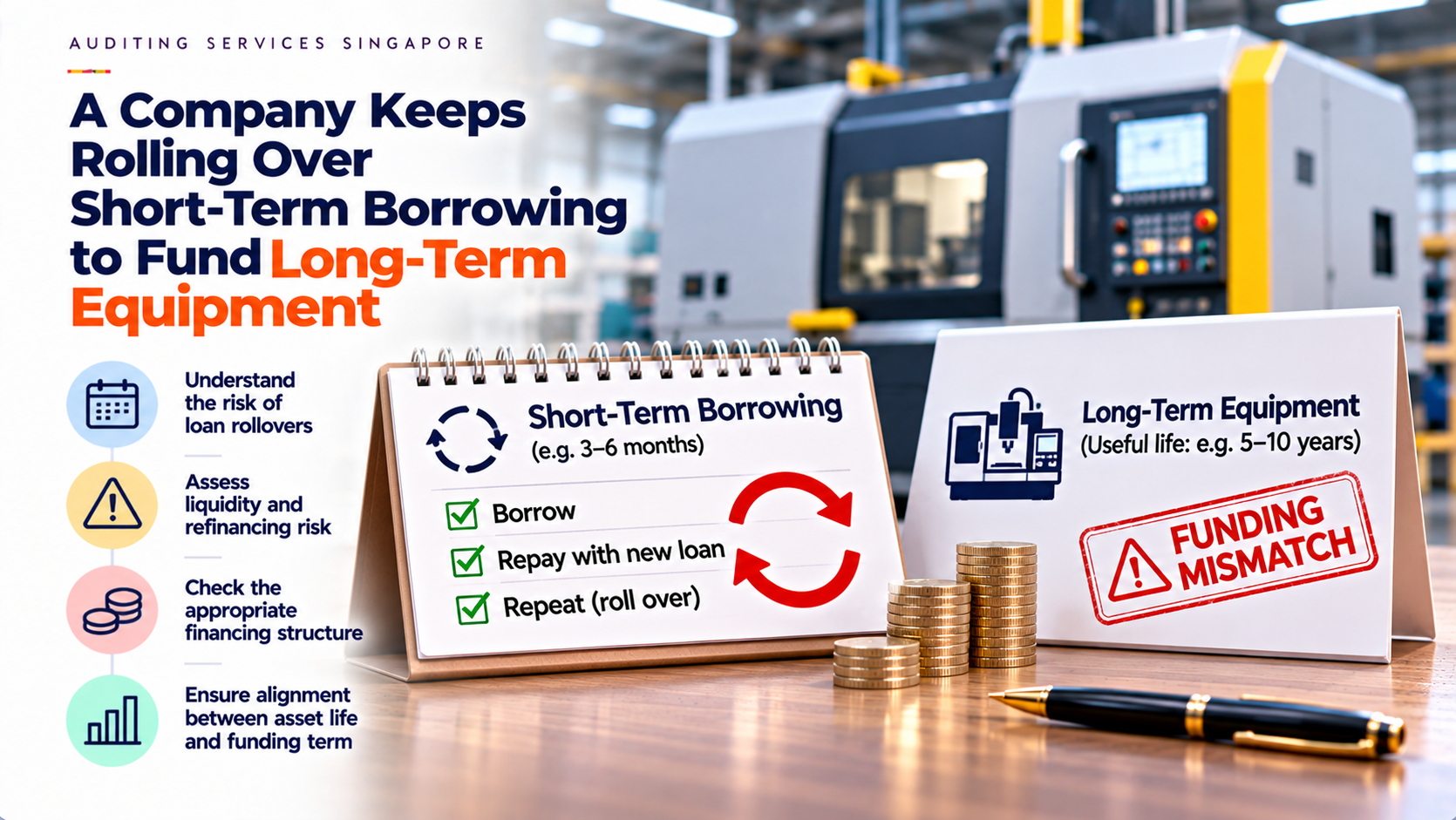
The equipment was purchased to support several years of production, but the borrowing used to pay for it falls due every few months. Each time repayment approaches, management arranges another renewal. The machine continues operating, interest is paid and the arrangement begins to feel like a permanent source of funding.
That familiarity can conceal an important dependency. The equipment generates benefits gradually, while the lender may require repayment much sooner. If the next renewal is delayed, reduced or declined, the company must find cash before the asset has generated enough to repay its cost.
For management, the question is whether the funding arrangement remains suitable and what would happen if its terms changed. Gekonnt PAC provides accounting, financial analysis and advisory support relevant to understanding cash flow and financial commitments. A useful review begins with the actual repayment obligations and the cash available to meet them.
Identify the Funding Mismatch
Equipment can support operations for many years without generating enough cash to repay its purchase price in the first few months. A production line may need time for installation, testing and customer demand to build. Even after sales begin, customers may pay later than suppliers and employees.
Short-term borrowing can serve a valid temporary purpose, such as covering the period before an agreed longer-term facility becomes available. The concern arises when the temporary arrangement continues without a clear repayment or replacement plan.
Document why the borrowing was originally used and what was expected to repay it. If that source has changed or failed to materialise, management should revisit the arrangement. Repeated renewal is a financing activity; it does not demonstrate that the equipment has become self-funding.
Read the Facility Terms Behind Each Renewal
A loan renewed several times may still require fresh lender approval at the next maturity. Management should distinguish a contractual right to extend or redraw from an expectation based on previous experience.
Review the facility agreement, renewal letters and repayment notices. Identify maturity dates, notice requirements, review clauses, security and any conditions affecting continued availability. A short-term drawing under a longer committed facility may present a different position from borrowing that depends on a new approval every few months.
Maintain a summary that refers back to the signed documents. Verbal reassurance or a positive relationship with the bank can be useful context, but it should not replace confirmation of the company’s rights and obligations. The cash forecast needs to reflect what is available under the agreement.
Separate Interest Affordability From Principal Repayment
A company may comfortably pay interest while lacking the funds to repay principal. Because interest appears regularly in monthly expenditure, management can become accustomed to treating it as the main financing cost that needs attention.
The principal remains a cash obligation even when it does not reduce accounting profit as an expense. A forecast that includes interest but assumes automatic renewal of the principal can therefore overlook the largest payment exposure.
Show both elements explicitly. Identify the amount due at each maturity and the funding assumption used to meet it. If the forecast relies on renewal, label that dependency and show what the cash position would be without it. This makes the decision visible to management rather than embedding it silently in a spreadsheet.
Quantify the Gap at the Next Maturity
Consider a hypothetical company that buys equipment for S$600,000 using S$100,000 of its own cash and a S$500,000 loan due in six months. Management expects the business to generate S$90,000 of cash available for debt repayment during that period, after operating needs and other commitments.
Even if the forecast is achieved, the company still needs another source for S$410,000 when the loan matures. Renewing that amount may be possible, but it remains an assumption requiring support. The equipment’s continued presence in the factory does not fill the cash gap.
If available cash generation falls to S$50,000, the refinancing requirement rises to S$450,000. These simplified figures show why the review should consider both the amount due and the reliability of the cash expected before maturity. The analysis should also preserve an appropriate operating cash buffer.
Test the Equipment’s Contribution to Cash
The equipment may increase production capacity without producing an equivalent increase in receipts. Customers might order less than expected, margins may narrow or additional inventory may be required to support the higher output.
Compare actual performance with the investment case. Review additional sales, operating savings, maintenance, staffing and working capital needs. Where benefits are shared across the business, explain how they have been estimated and avoid allocating the same benefit to several investments.
The aim is to assess what the equipment contributes to the company’s ability to repay debt. If it has not achieved the expected results, a longer loan term may ease immediate pressure, but management still needs to address the commercial reasons for the shortfall.
Build the Forecast Around Repayment Dates
A forecast showing positive cash at year-end may conceal a shortfall when a loan falls due earlier. Timing matters, particularly when maturity coincides with payroll, tax payments, seasonal inventory purchases or other borrowing repayments.
Use a forecast detailed enough to show the relevant weeks around maturity. Connect expected customer receipts to supporting schedules and include existing payment commitments. Extend the outlook beyond the immediate renewal so that the next repayment does not simply become another future surprise.
Gekonnt’s accounting services include financial analysis and advisory support related to cash flow and business planning. Management can use that reporting foundation to review the assumptions behind its borrowing decisions. The funding decision itself should remain supported by the company’s circumstances and the actual terms offered by lenders.
Examine What Happens if Renewal Terms Change
The next renewal may be available on less favourable terms. The lender could reduce the facility, increase pricing, require additional security or ask for partial repayment. A plan that considers only full renewal or complete rejection misses these intermediate outcomes.
Test a small set of realistic scenarios. For example, assess the effect of a reduced limit, a delay in approval or a required principal payment before renewal. Show the resulting cash gap and when management would need to act.
Identify practical responses for each scenario. These might include additional committed funding, postponement of discretionary spending or a supported shareholder contribution. Distinguish actions management can execute from possibilities that still require another party’s agreement.
Compare the Full Cost of Alternative Funding
A longer-term facility may reduce renewal frequency, but its suitability depends on more than the quoted interest rate. Compare repayment profiles, arrangement fees, security requirements, early repayment terms and any final balloon payment.
Repeated short-term borrowing can also carry costs beyond interest. Renewal charges, administrative work and frequent financing negotiations consume resources. Include those costs where they are relevant and avoid comparing facilities using inconsistent assumptions.
Use the same borrowing requirement and forecast when assessing options. A lower monthly payment may simply defer more principal to the end of the term. Management should understand the complete payment schedule and the remaining exposure at maturity before deciding that an alternative is more affordable.
Avoid Assuming the Equipment Can Be Sold Quickly
Equipment may provide security for the borrowing, but its carrying amount is not a guaranteed source of immediate cash. A specialised machine can take time to sell, and removal, transport or recommissioning costs may affect the amount a buyer will pay.
Selling an essential asset can also reduce the company’s ability to generate revenue. If the business depends on the machine, a disposal may solve one repayment problem while creating another operating problem.
Where asset sale is part of a contingency plan, obtain realistic information about demand, timing and net proceeds. Check any lender consent or release requirements. Do not use the original purchase price or accounting value as an automatic estimate of cash available for repayment.
Keep Borrowing Records and Financial Reporting Consistent
The purpose of a loan does not, by itself, determine how it is classified in the financial statements. Borrowing used for long-term equipment can still be a current liability if the relevant reporting requirements lead to that conclusion.
Under IAS 1, the assessment includes whether the company has a substantive right at the reporting date to defer settlement for at least twelve months. Expecting a lender to renew the loan is not equivalent to holding that right. Covenant conditions and the timing of refinancing can also affect the assessment.
Finance should apply the company’s relevant reporting framework to the actual agreement. Maintain signed facility documents, repayment schedules and covenant calculations so that the conclusion is supported. The accounting presentation and the cash plan should both reflect the underlying terms.
Review Conditions That Could Restrict Funding
Loan agreements may contain conditions relating to financial ratios, reporting deadlines, security or permitted use of funds. Management needs to understand these conditions before relying on a facility for continuing equipment finance.
Prepare the required calculations using the definitions in the agreement. A lender’s definition of a financial measure may differ from the company’s standard management report. Record testing dates and the information that must be submitted.
If a potential issue emerges, raise it early with the appropriate advisers and lender. A discussion does not itself amend the agreement, so retain written evidence of any approved change. The forecast should not assume that an unresolved condition has been waived.
Protect the Working Capital Needed to Operate
Repaying equipment borrowing from available cash can look attractive until the company needs to replenish stock or fund customer credit. Using all receipts for debt reduction may force the business to borrow again for daily operations.
Assess the minimum cash and working capital needed to sustain trading. Include seasonal demands and realistic customer payment behaviour. The amount available for principal repayment should be calculated after those requirements, rather than treating the entire bank balance as surplus.
Management should also examine whether a facility intended for operating needs has become permanently occupied by equipment funding. If so, the company may have less capacity to absorb routine cash fluctuations than its headline credit limit suggests. That reduced flexibility needs to be visible in funding decisions.
Prepare a Decision Before the Renewal Becomes Urgent
Set a review date sufficiently ahead of maturity to gather information and consider alternatives. The time required will depend on the lender, transaction and documentation, so management should confirm the process instead of assuming another renewal will be immediate.
Prepare a decision paper showing the outstanding debt, forecast repayment capacity, proposed funding arrangement and downside exposure. Explain whether the objective is to repay the balance gradually, replace temporary borrowing or retain flexibility for a defined period.
Assign owners and dates to the next steps. A refinancing plan is stronger when management knows which documents are outstanding, which approvals remain and when a fallback decision must be made. This reduces reliance on last-minute negotiations.
Give the Equipment a Sustainable Funding Plan
Repeated renewal can keep a business operating, but it should be a deliberate financing choice supported by evidence. Management needs to understand how the equipment generates cash, when principal falls due and what options remain if lender support changes.
A sound review connects the loan agreement, operating forecast and investment performance. It makes renewal assumptions visible and tests whether the company can protect daily operations while meeting its financing obligations. That information helps directors assess the full commitment behind an apparently manageable interest payment.
If short-term borrowing has become the ongoing source of funding for long-term equipment, discuss the underlying financial records and cash-flow analysis with Gekonnt PAC. Bring the facility agreements, repayment history and operating forecasts so that the reporting position can be reviewed and management can approach its next financing decision with clearer information.