A Full Calendar Can Create the Illusion of a Productive Company
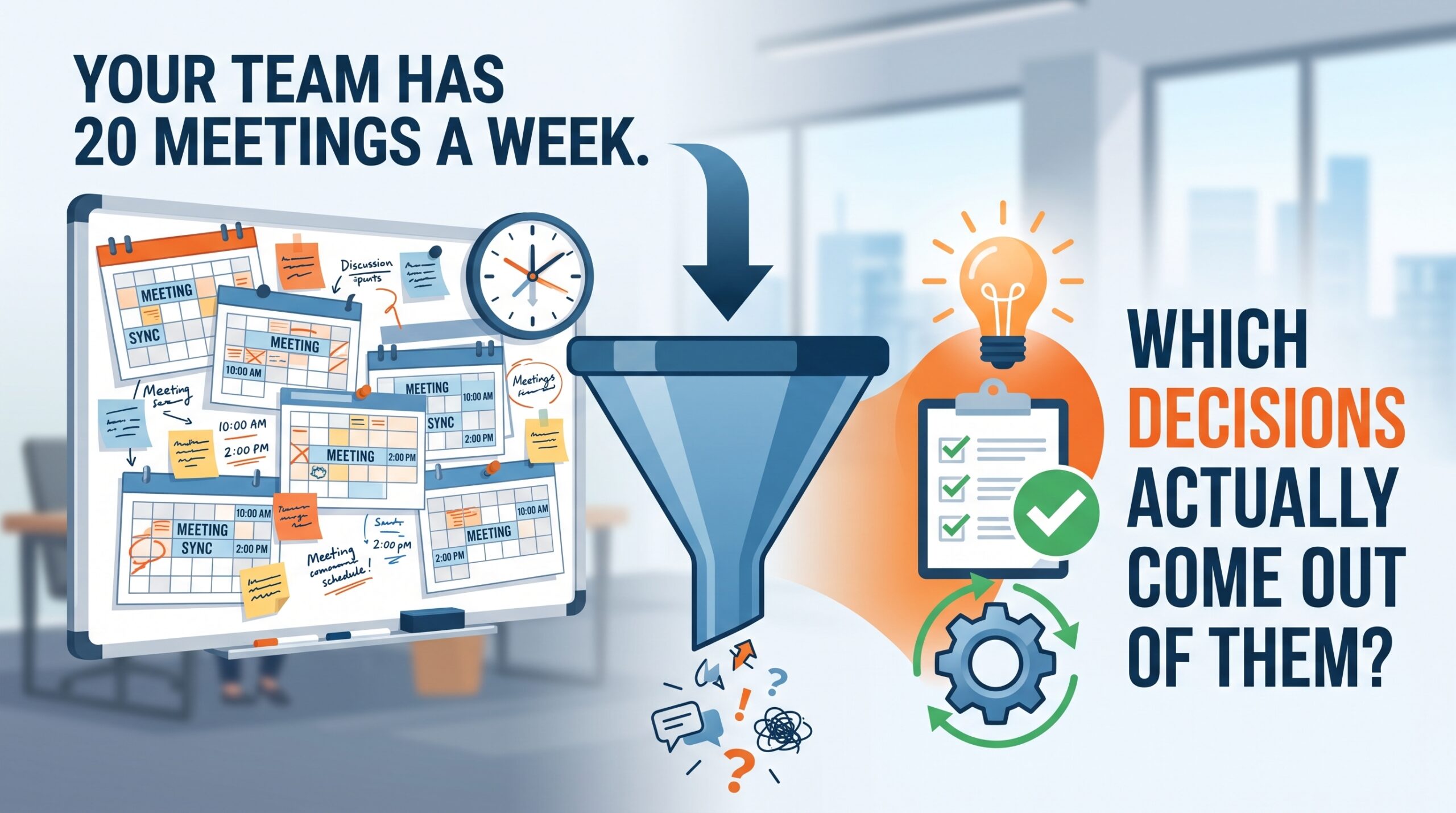
A business can look extremely busy from the outside and still make surprisingly little progress. Managers move from one meeting to another, employees spend hours preparing slides, calendars are packed with colour-coded blocks and everyone seems to be discussing something important. Yet when the week ends, the same questions are still unresolved, the same projects remain delayed and the same issues return to the agenda next Monday. This is where companies need to distinguish between activity and decision-making. Meetings can be useful when they help people share information, resolve disagreements, allocate resources and make decisions that move the business forward. They become expensive when they exist mainly because they have always existed. A company with 20 meetings a week is not necessarily well managed simply because communication is frequent. The more important question is what changed because those meetings happened.
Twenty Meetings Can Quietly Consume Hundreds of Working Hours
One meeting rarely looks expensive when viewed individually. A one-hour meeting involving six employees may feel like only one hour has been used, but the business has actually consumed six employee-hours before considering preparation time, follow-up and the interruption created by moving in and out of focused work. Multiply that across 20 meetings and the cost grows quickly. If an average meeting involves six people for one hour, that already represents 120 employee-hours every week. Over a year, the total can become substantial. Senior employees make the cost even higher because their time is particularly valuable and often difficult to replace. This does not mean meetings should be eliminated simply to save hours. It means businesses should treat meeting time as a resource that deserves the same discipline applied to money, headcount and technology spending. If management would question a S$50,000 annual software subscription, it should also question recurring meetings that consume an equivalent or larger amount of staff capacity without producing clear outcomes.
The Real Cost Includes the Work That Did Not Happen
The visible cost of meetings is only part of the problem. Every hour spent in a meeting is an hour that could not be spent completing another task, analysing a customer issue, preparing a proposal, improving a process, reviewing financial information or solving an operational problem. The opportunity cost becomes particularly significant for employees who need long periods of uninterrupted concentration. A meeting at 10:00 am and another at 11:30 am can fragment an entire morning even if each session lasts only 45 minutes. Employees may avoid starting complex work because they know they will soon be interrupted. After the meeting, they need time to remember where they stopped and regain concentration. This means a calendar filled with short meetings can reduce productivity more than the meeting durations alone suggest. Management should therefore evaluate not only whether a meeting is useful, but whether it is useful enough to justify the disruption it creates.
Some Meetings Exist Because Nobody Knows Who Can Decide
One of the biggest reasons companies accumulate meetings is unclear decision authority. A relatively simple question may require representatives from finance, operations, sales, HR and senior management because nobody knows who has the authority to make the final call. The discussion continues until everyone feels comfortable, even when only one or two people actually need to decide. Another meeting may then be scheduled because somebody important was absent from the first one. This is not necessarily a communication problem. It may be a governance problem. Strong management structures clarify which decisions can be made by employees, which belong to department heads and which genuinely require senior management or board involvement. When decision rights are unclear, meetings become the mechanism through which responsibility is shared so widely that nobody feels individually accountable for the outcome.
A Meeting Without a Decision Owner Often Produces Another Meeting
Companies can dramatically improve meeting effectiveness by identifying who owns the decision before the discussion begins. Suppose a company is deciding whether to change a supplier. Procurement may provide pricing information, operations may discuss reliability, finance may explain working-capital implications and quality teams may raise technical concerns. All of those perspectives are useful. However, somebody still needs to own the decision. If the meeting ends with “we will think about it and discuss again next week”, the organisation has consumed time without resolving the issue. A clear decision owner does not mean ignoring other departments. It means one person has responsibility for considering the information and making or escalating the decision according to the company’s governance structure. Without that accountability, meetings can become places where information is exchanged indefinitely because nobody feels authorised to convert discussion into action.
Status Updates Are Often Expensive Ways to Read Information Aloud
Many recurring meetings consist primarily of people reporting what happened during the previous week. Sales gives an update, finance reads several numbers, operations discusses current projects and HR mentions recruitment. Everyone listens even when most of the information is already available in reports, dashboards or emails. These meetings often survive because they create a sense of alignment, but management should question whether every update genuinely requires synchronous discussion. Information that does not require debate or a decision can frequently be shared before the meeting. Participants can then use meeting time for exceptions, disagreements, risks and decisions. A 60-minute weekly meeting may become a focused 25-minute discussion simply by moving routine information sharing outside the room. The objective is not to eliminate communication. It is to reserve expensive group time for activities that actually benefit from multiple people thinking together.
A Useful Agenda Should Be Written Around Questions, Not Topics
Agendas often contain broad labels such as “sales update”, “operations”, “finance” and “HR”. These headings tell participants what department will speak but reveal very little about what the meeting is supposed to achieve. A stronger agenda turns topics into questions that require an outcome. Instead of “sales”, the agenda might ask whether the company should approve a 15% discount requested by a major customer. Instead of “operations”, the question might be whether production should add a second shift next month. Instead of “finance”, management might need to decide whether cash-flow forecasts support a planned capital expenditure. This seemingly small change forces organisers to think about why each item requires a meeting. If nobody can formulate the decision or problem, the item may not belong on the agenda at all.
Meetings Become Inefficient When Everyone Is Invited Just in Case
A common corporate habit is inviting more people than necessary because excluding someone feels risky. Employees are added to the calendar because they might have useful information, might need to know what happened or might feel left out. Over time, a 20-minute discussion between three people becomes a one-hour meeting involving ten. Most participants spend the session listening to issues that do not require their input. This is expensive and can also reduce the quality of discussion because larger groups are often harder to manage. The organiser should distinguish between people who need to decide, people who need to advise, and people who simply need to know the outcome. The final group does not always need to attend. They may only need concise notes afterwards. Fewer participants can create more focused discussions while returning significant working time to the wider organisation.
Senior Leaders Can Accidentally Create a Meeting Culture
Employees often copy the habits of senior management. If the CEO or managing director responds to every issue by saying “let’s have a meeting”, managers below may do the same. Problems that could have been resolved through clear ownership or a short conversation become formal calendar events. Senior leaders may also unintentionally create bottlenecks by attending too many meetings. Employees begin to believe that no decision is valid unless the boss is present, so schedules are organised around senior management availability. This can slow the company considerably. Strong leadership does not require being personally involved in every discussion. In many cases, better control comes from defining authority clearly, establishing reporting expectations and reviewing significant exceptions rather than participating in every operational decision.
Consensus Can Sometimes Become an Excuse for Avoiding Responsibility
Many organisations value collaborative decision-making, which can improve outcomes by incorporating different perspectives. However, there is a difference between consultation and requiring universal agreement. If every decision must satisfy every participant, meetings can continue indefinitely. Sales wants one outcome, finance wants another and operations raises another concern. Instead of assigning responsibility to someone who weighs the trade-offs and decides, the group schedules another discussion hoping consensus will eventually appear. Some decisions will never make everyone happy because business involves competing priorities. A mature organisation needs a process for making decisions when reasonable people disagree. Otherwise, “we need more alignment” can become a polite way of saying nobody wants to take responsibility for choosing.
Repeated Meetings Can Reveal That the Real Problem Has Not Been Defined
Sometimes teams meet repeatedly because they are trying to solve different versions of the same issue. Consider a company experiencing delayed deliveries. Operations believes the problem is insufficient warehouse staff. Procurement believes suppliers are unreliable. Finance thinks inventory levels are too low. Sales says customers keep changing orders at the last minute. Everyone attends a weekly meeting, but the discussion moves between symptoms because the company has not agreed on the actual problem. Effective meetings require a clear problem statement supported by evidence. Management may discover that several causes exist, but at least the discussion becomes structured. Without this discipline, recurring meetings turn into storytelling sessions where each department explains why another department is responsible.
Data Should Reduce Arguments, Not Create More Slides
Companies increasingly have access to dashboards, analytics, spreadsheets and management systems, yet meetings can still be dominated by people debating basic facts. Sales presents one revenue number, finance presents another and operations uses a third definition. The first half of the meeting is spent determining whose number is correct. This is a data governance problem disguised as a meeting problem. Management should agree on common definitions, reliable sources and reporting ownership before expecting meetings to produce good decisions. More slides do not solve conflicting information. In fact, excessive reporting can make the problem worse because participants arrive with competing versions of reality. When reliable information is available beforehand, meetings can move beyond arguing about what happened and focus on what management should do next.
A Decision Should End With an Owner and a Deadline
One simple way to test whether a meeting was productive is to look at what happens during the final five minutes. If participants leave with vague statements such as “someone should look into this” or “we need to improve the process”, the meeting has probably not created enough accountability. A useful outcome is more specific. A named person owns the next action, a deadline is agreed and the expected result is clear. If a decision was made, the organisation should record it so that the same debate does not restart three weeks later. This discipline is particularly important for recurring management meetings because unfinished items can otherwise remain on the agenda indefinitely. A meeting should create movement. If the same item appears week after week without a change in ownership, information or decision, management should question why the discussion continues.
Meeting Minutes Should Capture Decisions, Not Recreate the Conversation
Some organisations produce pages of detailed minutes documenting almost everything participants said. These records can become so long that nobody reads them. In many operational situations, a more useful record focuses on the decision, the reason for it where relevant, the responsible person and the follow-up required. The purpose is not to create a transcript. It is to make organisational memory reliable. This becomes important when employees change roles or when someone later asks why a decision was made. Without a clear record, businesses can repeat old discussions because nobody remembers what was agreed. Good documentation also strengthens governance by showing that important issues were considered and assigned appropriately rather than disappearing into informal conversations.
Recurring Meetings Should Have to Re-earn Their Place on the Calendar
One reason organisations accumulate meetings is that recurring calendar invitations continue automatically. A weekly meeting created two years ago can survive long after the original problem has disappeared. New employees inherit the meeting without knowing why it exists. Nobody wants to cancel it because everyone assumes somebody else finds it useful. Companies should periodically review recurring meetings in the same way they review subscriptions, software licences or other ongoing costs. What is the purpose? What decisions were made during the last three sessions? Could the frequency be reduced? Do all participants still need to attend? Could the same outcome be achieved asynchronously? Cancelling a meeting does not mean communication becomes less important. It means the organisation is deliberately choosing the most efficient method for that communication.
More Meetings Can Actually Reduce Accountability
There is a counterintuitive risk in highly collaborative organisations. When every issue is discussed by a large group, individual accountability can weaken. Employees begin to think “the committee decided” rather than identifying who owns the result. If the decision succeeds, everyone participated. If it fails, responsibility is difficult to locate. Clear governance requires distinguishing collective input from individual ownership. A meeting can bring together relevant expertise, but somebody must remain accountable for executing the agreed decision and reporting whether it worked. This principle matters especially as companies grow because informal accountability that worked among five founders often becomes ineffective with 100 employees and multiple management layers.
Management Should Measure Whether Meetings Actually Improve Outcomes
Most companies track sales, costs, productivity, customer complaints and other operational indicators, but very few evaluate the effectiveness of management time. A business does not need an elaborate meeting KPI, but it can ask practical questions. How many recurring meetings exist? How many employee-hours do they consume? What proportion are primarily information updates? How many decisions are repeatedly delayed? Which meetings regularly finish without actions? Are senior managers spending so much time in meetings that they have little time to review strategy or analyse the business? These questions can reveal whether the organisation has developed habits that no longer support its size or complexity. The objective is not to create another reporting exercise about meetings. It is to treat management attention as a limited resource.
Internal Controls Should Support Decisions, Not Create Endless Approval Meetings
Companies sometimes confuse strong control with requiring more people to approve everything. After an error or loss, management may respond by adding another meeting, committee or approval layer. Over time, simple decisions become slow while truly important decisions still receive inadequate scrutiny because everyone is overwhelmed. Strong internal control should be proportionate to risk. Routine low-value matters can often be handled through clearly defined authority, while significant or unusual decisions deserve deeper review. This is one area where internal audit and governance reviews can help organisations examine whether controls genuinely manage risk or simply create administrative friction. A business with more controls is not automatically a business with better controls.
Gekonnt Can Help Businesses Look Beyond Compliance
For businesses working with Gekonnt Public Accounting Corporation, the value of governance and internal control extends beyond annual financial reporting. Lee & Hew’s broader audit and advisory work can help businesses consider whether processes, responsibilities and controls remain appropriate as the organisation grows. Meetings are a useful example because they sit at the intersection of governance, accountability and operational efficiency. A company may have formal policies and experienced managers yet still struggle to make timely decisions because authority is unclear or information arrives too late. Reviewing how decisions are made can therefore be just as important as reviewing the documents created after those decisions.
The Best Meetings Usually Have a Clear Reason to Exist
A useful meeting does not have to be short, formal or perfectly structured. Some complex decisions genuinely require hours of discussion. Strategic planning, acquisitions, major investments, difficult personnel decisions and significant risk issues deserve sufficient time. The important difference is that participants understand why they are there and what outcome is expected. When a meeting exists because a meaningful decision requires several perspectives, the time can be extremely valuable. Problems arise when meetings become the default response to uncertainty, incomplete information or unclear responsibility. The objective should therefore not be “fewer meetings at all costs”. It should be fewer unnecessary meetings and better use of the meetings that remain.
Conclusion: Count Decisions, Not Calendar Invitations
A company with 20 meetings a week may be highly effective, or it may simply be highly occupied. The calendar alone cannot tell management which one is true. A better indicator is what those meetings produce. Are important decisions made faster? Are responsibilities clearer afterwards? Do problems move towards resolution? Are employees receiving information they genuinely need? Are senior leaders spending their time on issues appropriate to their roles? If the answer is repeatedly no, the organisation may have developed a meeting habit rather than a decision-making system. The solution is not automatically to cancel half the calendar tomorrow. It is to examine why each recurring meeting exists and whether there is a better way to achieve the same result.
The Question After Every Meeting Should Be What Changed
The most practical test is surprisingly simple. When people leave a meeting, they should be able to explain what is different because the conversation happened. Perhaps a decision was approved, a risk was escalated, a disagreement was resolved, an owner was assigned or new information changed the company’s direction. If nothing changed and the same discussion will simply restart next week, management should question whether the meeting created enough value. Strong organisations do not avoid discussion. They use discussion to create decisions, and they use decisions to create action. That is ultimately the difference between a team that spends the week talking about the business and a team that spends the week moving the business forward.